The 321-foot (98-meter) New Glenn blasted into the afternoon sky from Cape Canaveral Space Force Station, sending NASA’s twin Mars orbiters on a drawn-out journey to the red planet. Liftoff was stalled four days by lousy local weather as well as solar storms strong enough to paint the skies with auroras as far south as Florida.
In a remarkable first, Blue Origin recovered the booster following its separation from the upper stage and the Mars orbiters, an essential step to recycle and slash costs similar to SpaceX. Company employees cheered wildly as the booster landed upright on a barge 375 miles (600 kilometers) offshore. An ecstatic Bezos watched the action from Launch Control.
It was only the second flight of the rocket that Jeff Bezos’ company and NASA are counting on to get people and supplies to the moon — and it was a complete success.
New Glenn’s inaugural test flight in January delivered a prototype satellite to orbit, but failed to land the booster on its floating platform in the Atlantic.
The identical Mars orbiters, named Escapade, will spend a year hanging out near Earth, stationing themselves 1 million miles (1.5 million kilometers) away. Once Earth and Mars are properly aligned next fall, the duo will get a gravity assist from Earth to head to the red planet, arriving in 2027.
Once around Mars, the spacecraft will map the planet’s upper atmosphere and scattered magnetic fields, studying how these realms interact with the solar wind. The observations should shed light on the processes behind the escaping Martian atmosphere, helping to explain how the planet went from wet and warm to dry and dusty. Scientists will also learn how best to protect astronauts against Mars’ harsh radiation environment.
Launched and Refurbished in Cape Canaveral
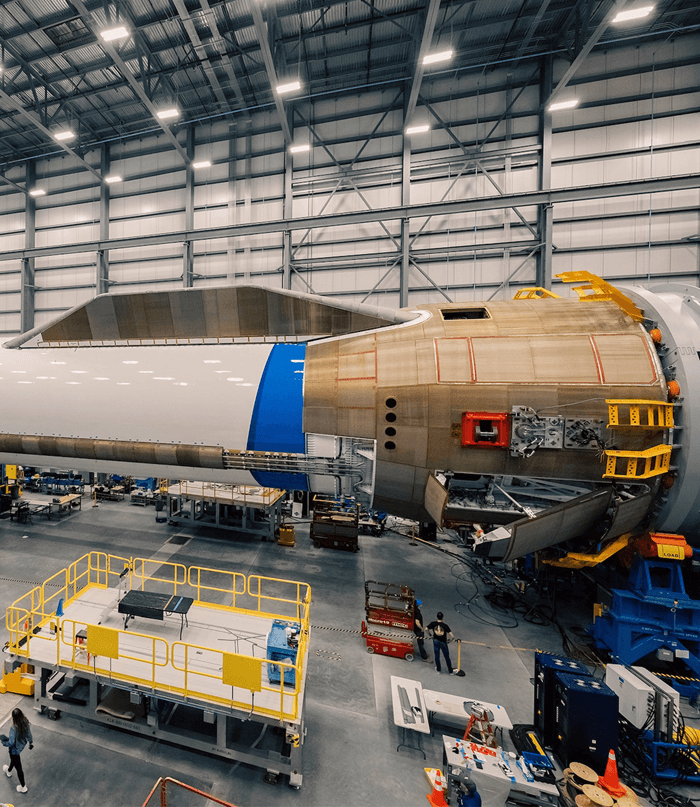
New Glenn is built, integrated, launched, refurbished, and re-flown within a nine-mile (14 km) radius of the rocket factory. Located in Exploration Park just outside the gates of Kennedy Space Center, the process starts at Blue Origin’s state-of-the-art manufacturing complex, which houses the vehicle’s fabrication, integration, and operations facilities, as well as New Glenn Mission Control.
The New Glenn Launch Complex
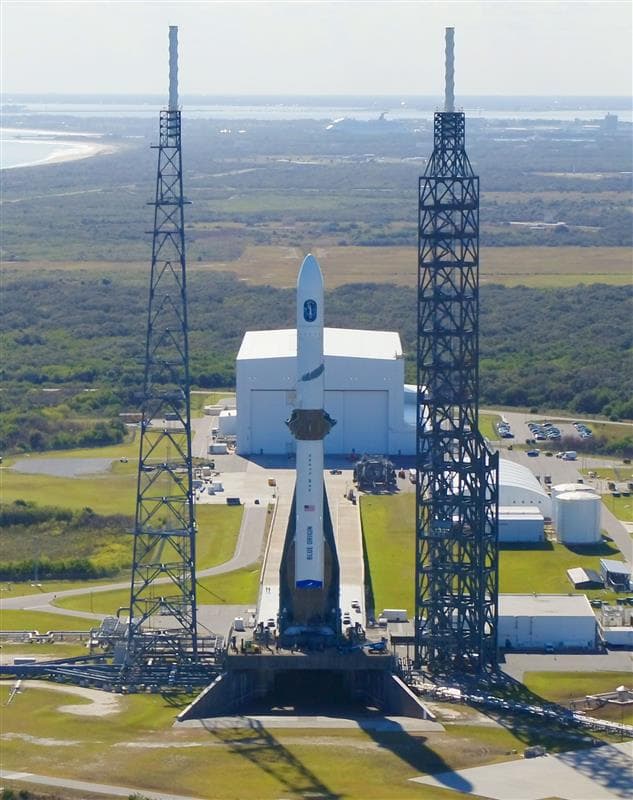
Launch Complex 36 (LC-36) is located at Cape Canaveral Space Force Station just nine miles (14 km) away from the rocket factory. Blue Origin invested more than $1 billion to rebuild the launch site from the ground up. Completed in 2021, LC-36 is the first newly rebuilt launch complex since the 1960s.
The complex is home to New Glenn’s launch pad, vehicle integration, first stage refurbishment, propellant facilities, and environmental control center. LC-36 is the former home of more than 140 Atlas II/III launches, including the Mariner, Pioneer, and Surveyor missions.
A New Glenn Orbital Flight
New Glenn lifts off. Following separation, the first stage autonomously descends to a landing platform located 620 miles (1,000 km) downrange. The two BE-3Us ignite, propelling the second stage into space. The fairing separates, safely delivering the payloads into orbit.

 AEROSPACE and ASTRONAUTICS